

The global fashion market is projected to generate $228.86 billion in revenue in 2026, growing to roughly $285.74 billion by 2030 (Statista). That’s not a small opportunity. It’s also not an easy one.
At Best Rank Zone, we’ve reviewed dozens of new fashion ecommerce launches over the past year. The pattern is almost always the same. Founders skip straight to building a store. They pick a nice template, upload a few products, and wait for sales. Then nothing happens.
The brands that actually break through follow a sequence. Niche first. Design second. The right platform third. SEO built in from day one — not bolted on after launch. This guide lays out that exact sequence. If you’re researching how to start a fashion ecommerce brand, treat this as your working playbook, not just background reading.
Why Most New Fashion Brands Fail (And How to Avoid It)
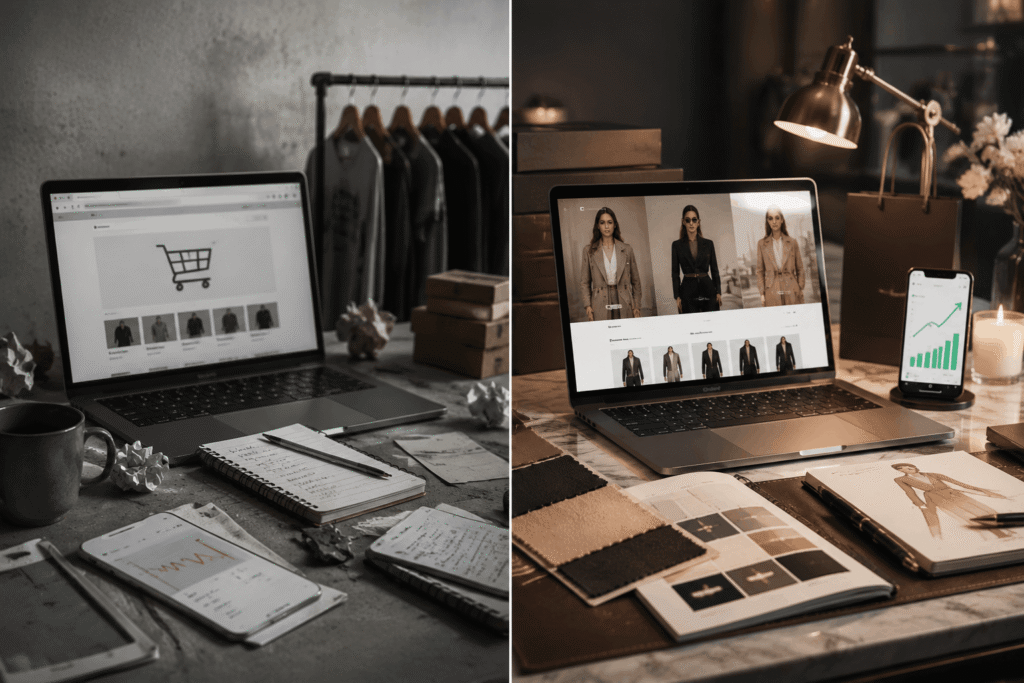
Here’s the uncomfortable number first: industry data compiled from Failory, Business of Fashion, and FashionINSTA suggests 80–90% of new clothing startups fail within 2–5 years. That’s a brutal survival rate.
But it’s not because the ideas were bad. It’s usually one of three things:
- No clear niche. “Sustainable fashion” and “minimalist streetwear” describe categories, not brands.
- No demand validation. Inventory gets ordered before anyone confirms real people will buy it.
- No visibility strategy. The store exists, but nobody outside the founder’s own social circle can find it.
At Best Rank Zone, this last point is where we spend most of our time with new fashion clients. A beautiful store with zero organic visibility is a very expensive hobby. Let’s fix that from the ground up.
Step 1: Choose a Specific Niche (Not a Category)
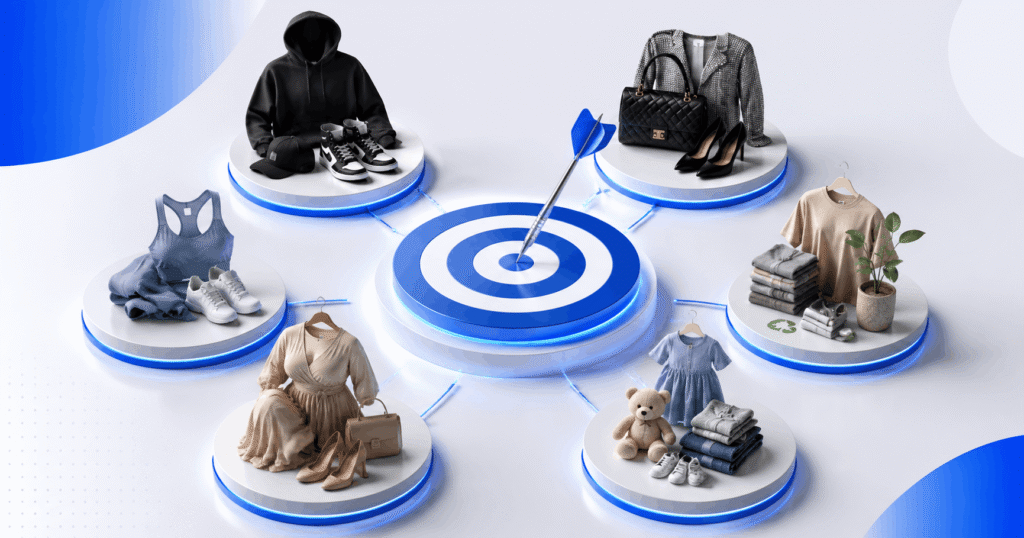
The online fashion market rewards specificity. A brand for “women who wear dresses” competes with everyone. A brand for “sustainable linen dresses for humid climates” competes with almost no one.
How to validate a niche before spending money
- Search social platforms and forums for people already discussing the problem your product solves
- Run a landing page with a $100–150 test ad budget; a 3–5% email signup rate is a solid green light
- Talk to 20–30 potential customers directly — surveys or DMs both work
- Open a small pre-order window; 20–50 sales before production confirms real demand and generates early cash
Quick Tip: If a large retailer like Zara or H&M could copy your product tomorrow without changing anything about who they are, your niche isn’t sharp enough yet.
Step 2: Build Your Brand Identity and Design Direction
Your brand identity is what customers actually attach to — the product is the delivery mechanism. Before sourcing a single fabric swatch, lock down:
- Brand story — why this label exists and who it serves
- Visual identity — logo, color palette, typography, packaging
- Design point of view — silhouettes, fabrics, and the aesthetic that ties every piece together
There’s no shortage of design ideas fashion resources to pull inspiration from — trend forecasting platforms like WGSN, runway archives, and increasingly, AI-assisted moodboard and sketch tools that let solo founders produce professional-looking concepts without a design degree.
Many first-time founders also study designer inspired fashion — pieces that reinterpret current runway silhouettes at accessible price points — to understand what’s resonating commercially before locking in a full collection.
At Best Rank Zone, we often see new brands try to launch a 20-piece collection out of the gate. Don’t. A tight 6–10 piece capsule photographs better, sells out faster, and costs a fraction to produce.
Step 3: Choose Your Business Model and Design Tools
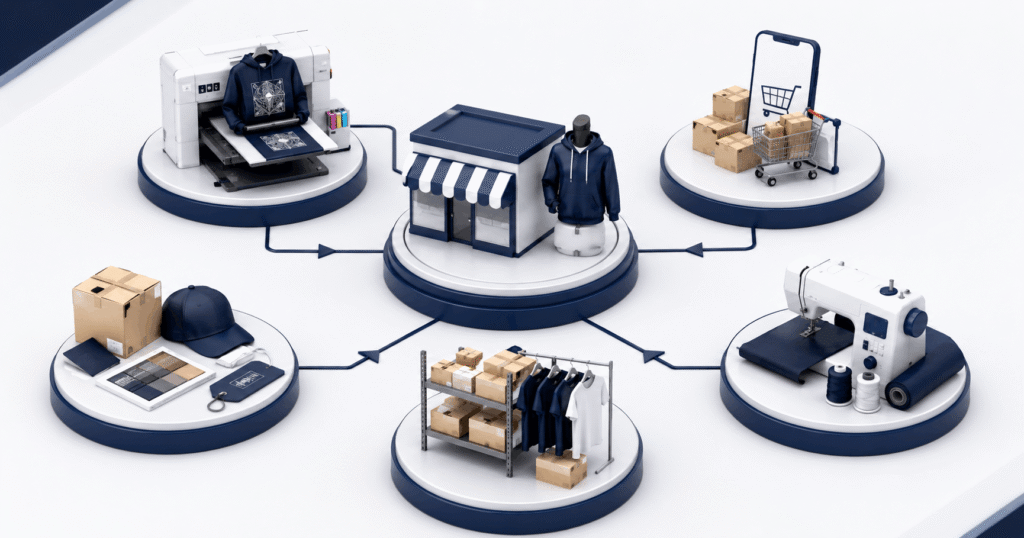
Before you build anything, decide how you’ll actually produce your products. This choice affects your cash flow, your risk, and your speed to market more than almost any other decision.
| Business Model | Upfront Cost | Inventory Risk | Speed to Launch | Best For |
| Print-on-demand (POD) | $1,000–$5,000 | Very low | Fast | First-time founders testing a niche |
| Dropshipping | Low | None | Fast | Testing trends before committing to a brand |
| Small-batch manufacturing | $10,000–$25,000 | Moderate | Medium | Brands with validated demand |
| Cut-and-sew / private label | $10,000–$50,000+ | High | Slow | Established niches with proven repeat demand |
| Pre-order / made-to-order | Low | Very low | Medium | Cash-conscious launches with an engaged audience |
Once you’ve picked a model, you’ll likely prototype using dedicated clothing design websites — platforms that generate tech packs, visualize garments on 3D avatars, or produce print and pattern concepts without a full design team. These tools are especially useful for bootstrapped founders who can’t yet justify an in-house designer.
Step 4: Build Your Online Store
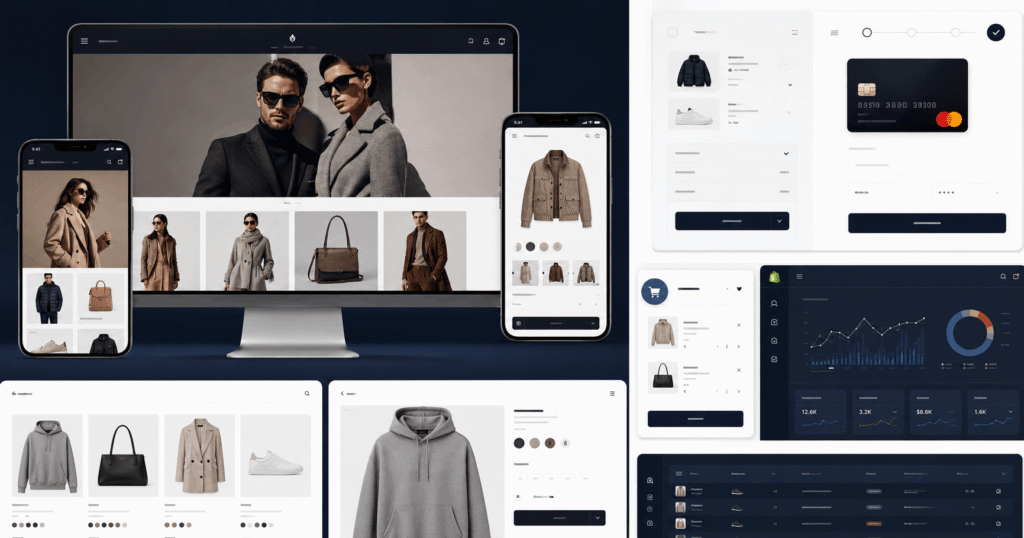
This is where the brand becomes real. When people search for designer websites or a website for clothes designing, they’re often studying how established labels structure their homepage, product pages, and checkout — genuinely worth doing before you build your own.
Platform comparison
| Platform | Best For | Ownership | Notes |
| Shopify | Most new fashion brands | Platform-hosted | Largest app ecosystem; fashion-specific themes (e.g., Colorblock, Broadcast) |
| WooCommerce | Founders wanting full control | Self-hosted (WordPress) | No transaction fees; more setup complexity |
| BigCommerce | Fast-growth, omnichannel brands | Platform-hosted | Strong for multi-channel selling |
| Fourthwall / Printful | Creator-led, POD-first brands | Platform-hosted | Fastest path from idea to first sale |
Whichever you choose, prioritize mobile checkout speed and clean image-heavy product pages. Fashion shoppers buy visually — a slow or cluttered page kills conversion fast.
Step-by-step store launch checklist
- Register your business and required licenses
- Secure your domain and set up your platform
- Write unique product descriptions — fabric content, fit notes, sizing, and care instructions
- Shoot flat lay, on-model, and detail photography
- Configure payments, shipping, and a clear returns policy
- Add trust signals — reviews, size guides, transparent sourcing
- Set up a welcome email flow and abandoned-cart flow before launch day
Welcome and abandoned-cart email flows alone typically recover 20–30% of otherwise-lost revenue (Klaviyo benchmark data) — set these up before you launch, not after.
Step 5: Source Manufacturing and Order Samples
With a business model chosen, you need production partners:
- Domestic manufacturers — faster turnaround, easier quality control, higher unit cost
- Overseas manufacturers (China, India, Bangladesh, Portugal, Turkey) — lower cost at scale, longer lead times
- Print-on-demand producers — near-zero inventory risk, ideal for testing
- Small ateliers or freelance pattern makers — best for made-to-order or drop-based models
Always order samples before a full production run. Check stitching, fabric weight, and fit across your full size range. This is the single most common place first-time founders lose money.
Step 6: Build a Real SEO Strategy for Fashion Ecommerce
This is the step most guides treat as an afterthought — and it’s the one that determines whether you’re still fully dependent on paid ads a year from now.
SEO for fashion ecommerce works differently than SEO for blogs or SaaS, because most of your ranking pages are product and category pages, not articles. It also looks meaningfully different in 2026 than it did even two years ago.
What’s changed
Google AI Overviews now appear on an estimated 50–60% of U.S. searches, and separate analysis found AI Overviews specifically on shopping queries jumped from roughly 2.1% in November 2025 to about 14% by March 2026 — a 5.6x increase in four months (Digital Applied). Structured data doesn’t directly boost rankings, but it does unlock rich results — star ratings, price, and availability shown directly in search — which meaningfully lifts click-through rate.
The core pillars to get right
- Product schema markup — implement Product structured data with name, images, brand, SKU, price, and availability. Sync it with real-time stock status; a mismatch between “InStock” schema and a sold-out page damages trust and eligibility.
- Unique product and category copy — never rely on manufacturer descriptions. A fashion retailer with 8 color variants can accidentally create 80+ near-duplicate URLs, which wastes crawl budget and dilutes rankings.
- Image SEO — name files descriptively (cropped-linen-trench-coat.jpg, not IMG_2398.jpg), compress for speed, and write specific alt text. Product images increasingly surface in Google Lens and Pinterest search, not just text results.
- Site speed and Core Web Vitals — a 1-second mobile speed improvement can lift conversion by roughly 7%. Fast pages both rank and convert better.
- Buyer-intent content — style guides, fit guides, and “how to wear” content that targets long-tail searches and supports your core product pages.
- Clean internal linking — connect related products, categories, and guides with descriptive anchor text so both users and search engines understand how pages relate.
Quick Tip: Don’t chase keyword volume alone. A shopper searching “beige satin dress for engagement” converts far better than one searching generic “dresses” — even with lower search volume.
At Best Rank Zone, we often see new brands treat SEO as a one-time setup task instead of an ongoing system. It isn’t. Search behavior, algorithm updates, and AI-driven discovery are all moving quickly in 2026, and the brands compounding organic traffic are the ones revisiting this quarterly — not once at launch. If this feels like a lot to manage alongside production and fulfillment, that’s exactly the gap a specialized fashion ecommerce agency fills — handling both the technical SEO side and the visual/editorial demands specific to apparel, so you’re not learning schema markup and hemlines in the same afternoon.
Step 7: Market and Launch
With a discoverable store live, focus effort where fashion buyers already spend time:
- Organic short-form video (TikTok, Reels) — still the cheapest reach for apparel
- Email and SMS, starting well before launch day — a 500–2,000 person waitlist is a realistic 3–6 month pre-launch goal
- Micro-influencer gifting — 15–30 relevant creators can outperform one large paid placement
- Paid social, once organic content proves it converts — start small, kill underperformers fast, scale winners
Treat launch as a sequence — drops, restocks, and content beats over several weeks — not a single push that fades by day three.
Step 8: Plan for Growth and Positioning
Once your core collection sells consistently, growth usually comes from adjacent categories, tighter supply chain margins, or moving upmarket.
Brands considering the luxury fashion ecommerce space specifically need to invest early in premium packaging, white-glove customer service, and a site experience that matches the price point. Cheap-feeling UX undercuts a luxury positioning fast, regardless of how good the product actually is. If you’re weighing whether fashion is even the right category for your broader online fashion business ambitions, it’s worth benchmarking against a few adjacent verticals before fully committing capital — the customer acquisition math varies significantly by niche.
Frequently Asked Questions
1. How much does it cost to start a fashion ecommerce brand in 2026?
A bootstrapped print-on-demand launch typically runs $1,000–$5,000. A fully manufactured line runs $10,000–$50,000+, depending on minimum order quantities and sample rounds.
2. What’s the best business model for a first-time founder?
Print-on-demand or pre-order models carry the lowest financial risk, since you’re not holding unsold inventory while you validate demand.
3. Do I need a registered business before I start selling?
Yes. At minimum, register an LLC or equivalent entity, obtain an EIN (free via the IRS in the U.S.), open a business bank account, and secure any required sales tax permits before processing real transactions.
4. How is SEO for fashion ecommerce different from regular SEO?
Fashion SEO deals with fast-moving trends, high SKU counts with near-duplicate variants, and heavy visual search (Google Lens, Pinterest). It requires more disciplined schema, image optimization, and content refresh cycles than a typical content-driven site.
5. Should I hire a fashion ecommerce agency, or handle marketing myself?
Many founders handle initial branding and store setup themselves, then bring in a specialized agency once SEO, paid media, and content start competing for time with production and fulfillment.
6. What’s a realistic markup for pricing my products?
A common formula is retail price = cost of goods × 4–5x (the “keystone” model), leaving enough margin to cover marketing, returns, and platform fees while remaining profitable.7. How long before a new fashion ecommerce brand becomes profitable? This varies widely by model and marketing spend, but many founders target their first 12–18 months to reach consistent monthly profitability, particularly when using pre-order or hybrid POD models to control inventory risk
Final Thoughts
Starting a fashion ecommerce brand in 2026 isn’t about having the biggest budget. It’s about sequencing the work correctly: validate the niche, design with intent, choose a platform built for growth, and treat SEO as infrastructure rather than an afterthought.
At Best Rank Zone, the brands we see succeed long-term are rarely the ones that launched fastest. They’re the ones that got the foundation right before spending on ads — because a brand that looks and feels finished on day one earns customer trust first, and everything else compounds from there.